7.8 Sarangani Earthquake: PINGON response snapshot one month update
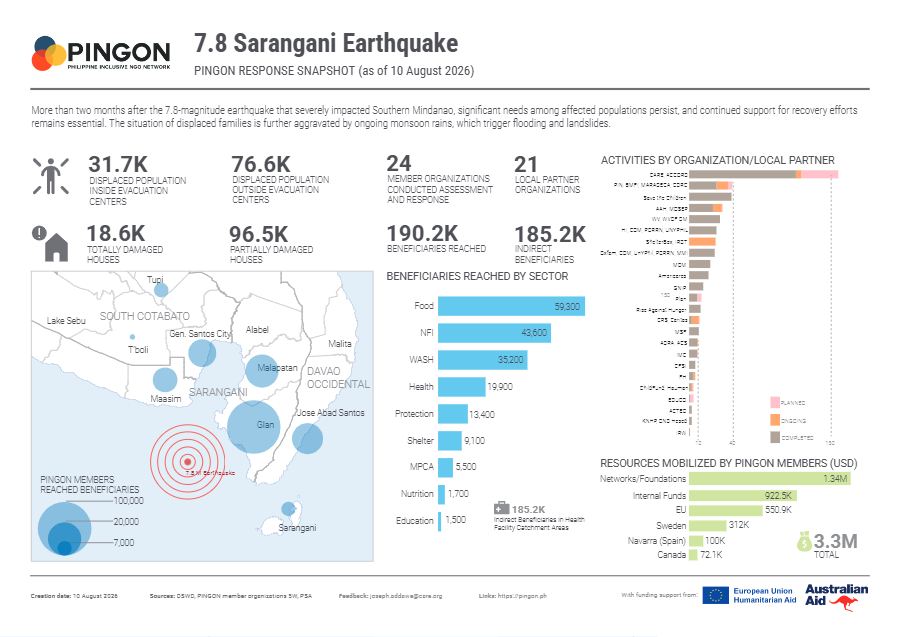
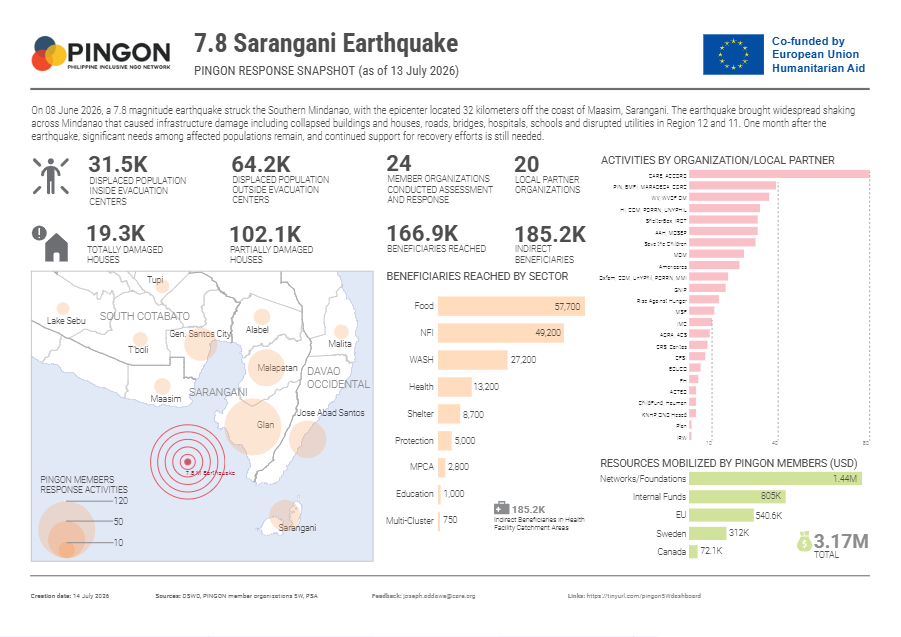
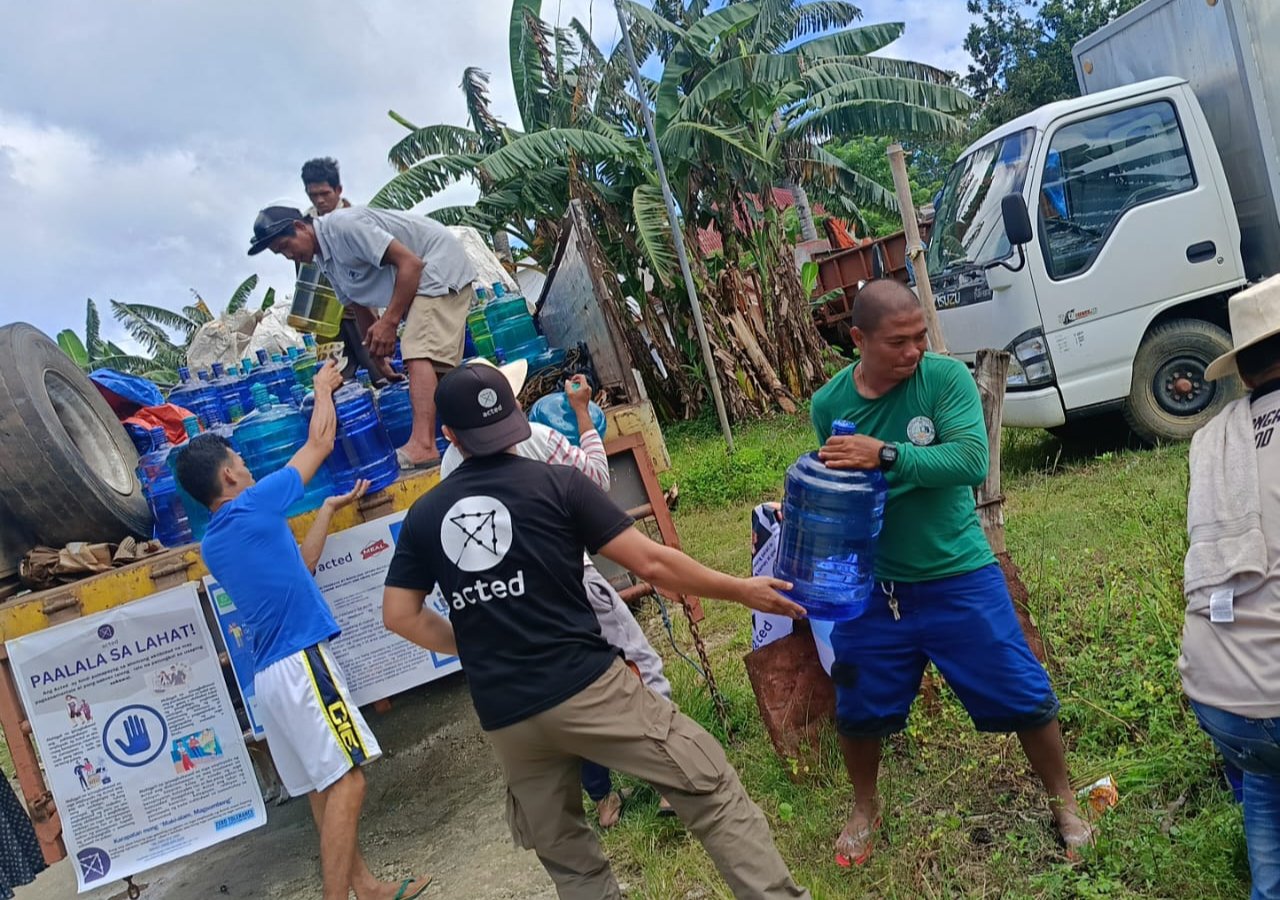
One month after the 7.8 Sarangani earthquake, significant needs among affected populations remain, and continued support for recovery efforts is still needed.
A network of 48 international and national NGOs coordinating relief, advocacy, and localization, supporting resilient, empowered communities where no one is left behind.

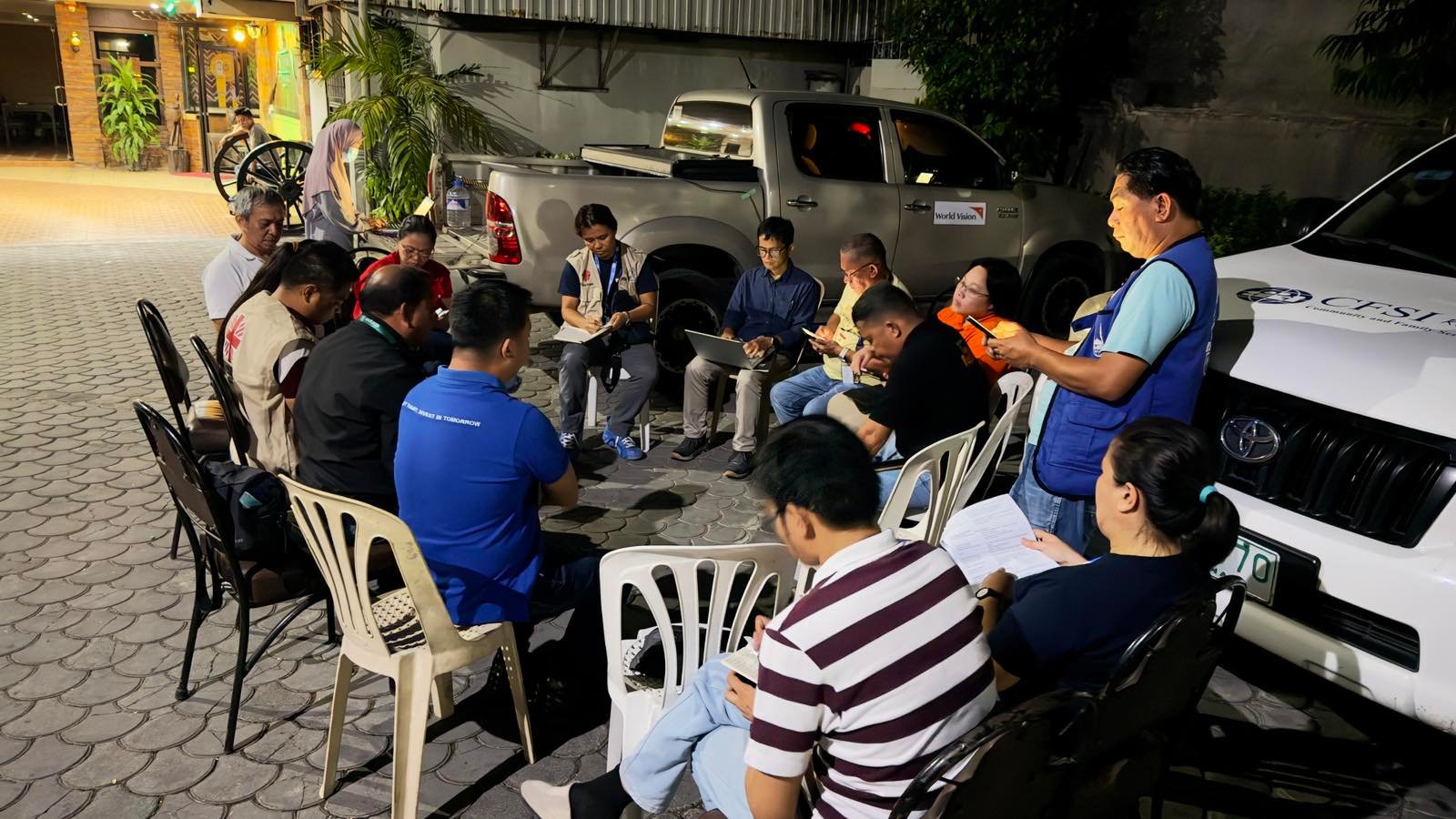
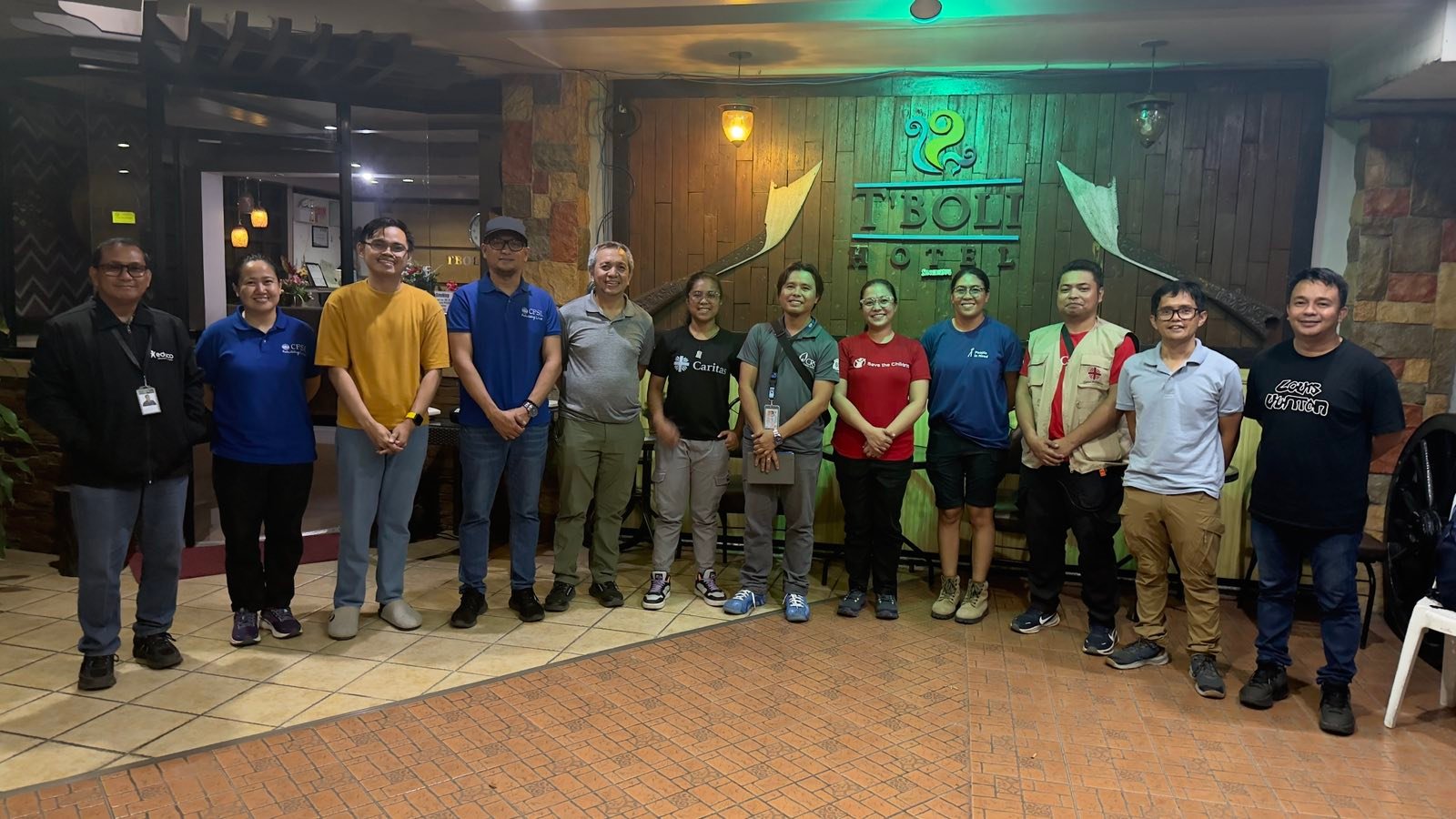
PINGON joint rapid needs assessment 9-12 June 2026 after the magnitude 7.8 Sarangani earthquake.
A platform for PINGON members to coordinate and share information on humanitarian efforts in alignment with national and international frameworks.
Learn more →A platform for members to collectively engage stakeholders through coherent, informed, and principled positions on critical humanitarian and development issues.
Learn more →A platform to operationalise Goal 3: strengthening localization by building understanding, solidarity, and direct support for national and local CSOs.
Learn more →One month after the 7.8 Sarangani earthquake, significant needs among affected populations remain, and continued support for recovery efforts is still needed.
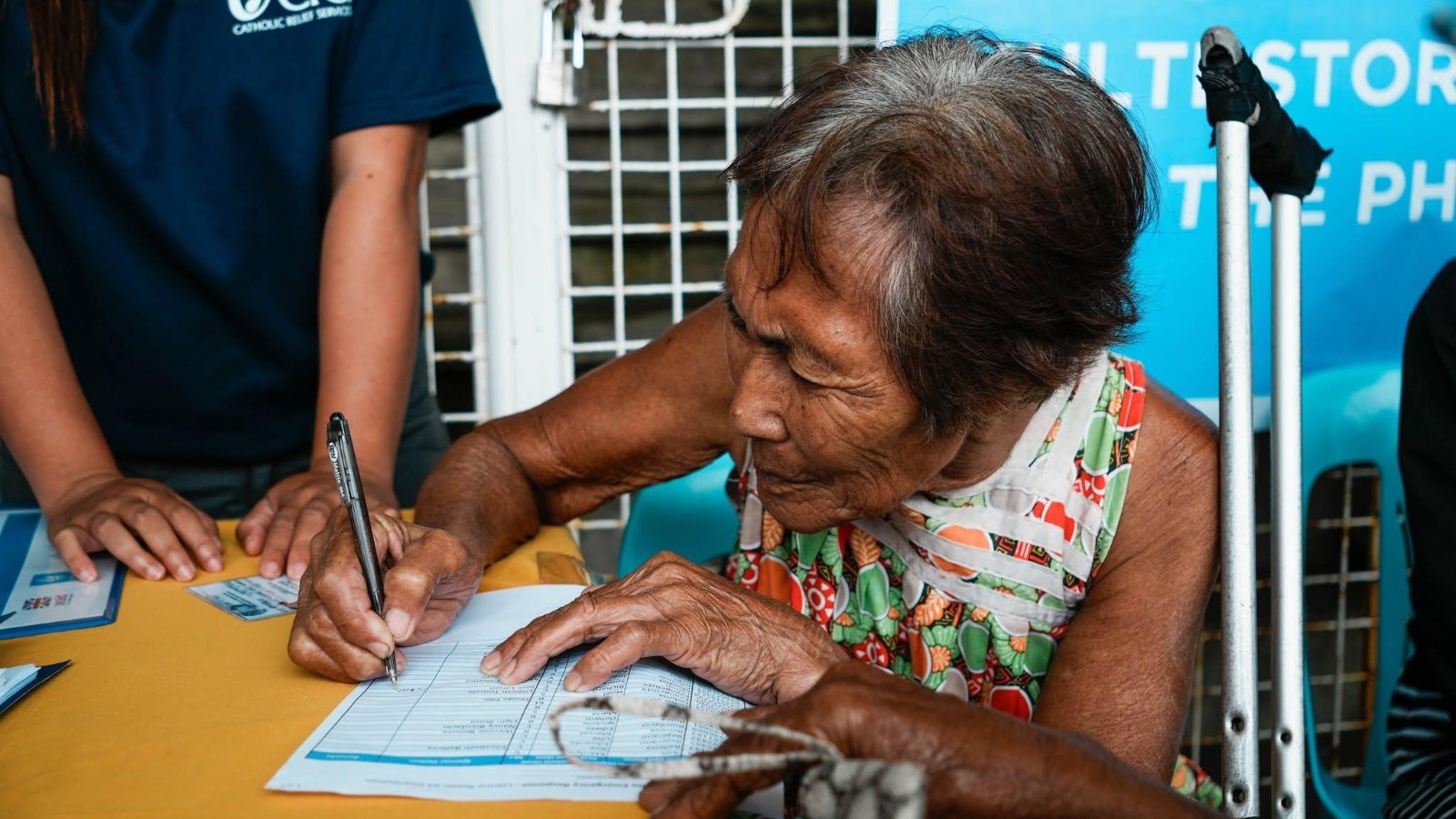
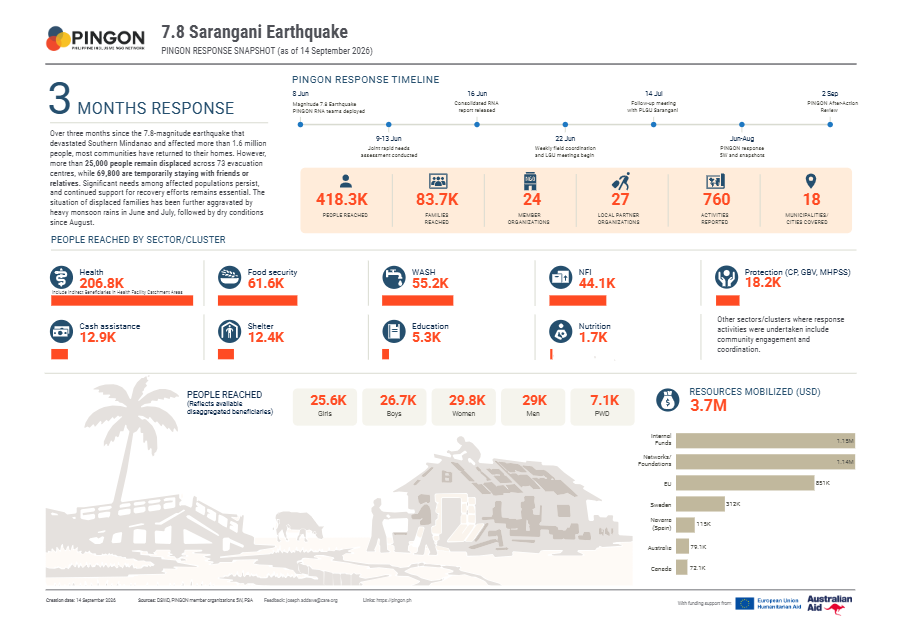
On 08 June 2026, a 7.8 magnitude earthquake struck Southern Mindanao, with the epicenter 32 kilometers off the coast of Maasim, Sarangani. 24 PINGON member organizations and 17 local partners have reached 97.7K beneficiaries across Sarangani, Davao Occidental, and South Cotabato. Open the link for the full response snapshot.
Founded in 2007 to coordinate humanitarian aid among international NGOs, PINGON broadened to an inclusive membership in November 2023, recognising local capacities and strengthening its commitment to localization, while keeping its widely recognised acronym.
Learn more about usResilient and empowered communities across the Philippines supported by a united, sustainable network of humanitarian organizations promoting principled, inclusive, collaborative, and locally-led humanitarian action.
To ensure timely, collaborative, effective, and accountable humanitarian action, and to prevent humanitarian crises by promoting risk reduction, preparedness, and resiliency.
Presence in all regions of the Philippines. See our response →
Updates, alerts, and resources from the network, in your inbox.